
Table of Contents
H13 is a hot-work tool steel made to keep useful strength while repeatedly heating and cooling. That definition is the starting point for understanding h13 tool steel properties.
This guide explains h13 tool steel properties from the beginning. It defines unfamiliar words, connects them with familiar objects, and separates common myths from what the material, process, or test actually shows. No metallurgy background is assumed.
The Direct Property Answer for H13 Tool Steel Properties
A property value for H13 tool steel needs a label and condition because hardness, yield strength, tensile strength, and toughness define different responses. The key distinction is between the name and the condition. A name places H13 tool steel in a family, while heating, cooling, bending, cutting, and exposure define what happened afterward. That history explains why two accurate descriptions can give different values without either one being false. For h13 tool steel properties, this detail sets the context.
Tensile strength is the highest calculated stress reached during a standard pull test before the sample finally separates. The location of an observation matters for h13 tool steel properties. An edge, core, bend, weld, cut face, and untouched surface can carry different parts of the same steel history.
Hardness, Strength, and Toughness Are Not Synonyms
A high hardness reading alone cannot prevent heat checking. Shape, surface condition, preheating, and cooling also influence tool life. One way to read h13 tool steel properties is to separate what can be seen from what must be measured. Colour, shine, and shape are visible, whereas chemistry and internal structure need other kinds of evidence.
Yield strength marks the point where a pulled sample begins to keep a permanent stretch after the load is removed. Two statements about h13 tool steel properties can both be correct when they answer different questions. One may define chemistry, another a test result, and a third the appearance of H13 tool steel after processing.
| Term | Simple meaning | Common mix-up |
|---|---|---|
| Article topic | h13 tool steel properties | read each property in the context of this topic |
| Hardness | resistance to a local indentation | not the same as toughness |
| Yield strength | start of permanent stretch | not the final breaking point |
| Tensile strength | highest stress in a pull test | not a measure of corrosion |
| Toughness | energy absorbed before fracture | not shown by hardness alone |
Why the Material Condition Changes the Number: H13 Tool Steel Properties
Rust resistance, magnetism, hardness, and strength in H13 tool steel come from different mechanisms and should not be used as shortcuts for one another. Small changes matter when they alter the internal structure. Cooling faster, adding a little molybdenum, or heavily bending a surface can influence response even when the metal still looks the same. That cause-and-effect link is central to h13 tool steel properties.
Careful hardening and repeated tempering develop the balance of hot strength and toughness associated with H13. A second memory aid is a family surname. The grade name indicates where H13 tool steel belongs, but it does not define every event in its history. Condition terms and process terms supply the missing chapters. H13 tool steel properties is where this explanation belongs.
What a Test Piece Is Actually Doing
A test result belongs to a condition: annealed, cold-worked, hardened, tempered, or another named state. The surface and core deserve separate attention. Air, water, tools, and cooling reach the outside first, while the middle responds more slowly. This plain size effect explains many apparently mixed answers about h13 tool steel properties.
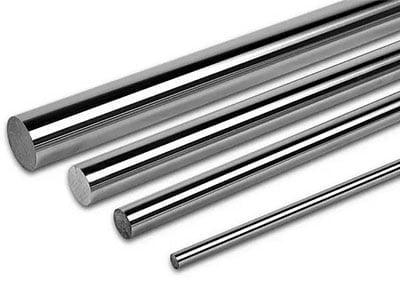
A photograph of H13 tool steel indicates form and surface, but it cannot reveal hardness, toughness, chemistry, or a hidden internal crack. A useful summary keeps cause and clue separate. A stain, magnetic pull, indentation, chip, or crack is a clue; the history of H13 tool steel helps explain which cause is most plausible. The relevant topic here is h13 tool steel properties.
How Size and Direction Affect Results: H13 Tool Steel Properties
Hardness tests press a shaped tip into the surface and convert the size or depth of the mark into a value. Temperature connects several ideas in h13 tool steel properties. It can change internal structure, speed corrosion, soften a hard region, or simply change how quickly a thin and thick item respond.
The name H13 tool steel becomes clearer when chemistry, internal structure, condition, shape, and environment are treated as separate layers. Repeated exposure can reveal changes that one event may miss. Many small contacts, cycles, or exposures can gradually produce wear, fatigue, staining, or a change in H13 tool steel that was not obvious at first. H13 tool steel properties is the topic behind this point.
Why a Range Is More Honest Than One Number
Toughness explains energy absorption and crack resistance, which is why a very hard tool can still chip. Appearance alone cannot confirm this response. Polishing can make unrelated steels look alike, and corrosion can make related steels look different. What happens inside H13 tool steel depends on structure and history as well as on the visible surface. In h13 tool steel properties, this is the relevant connection.
Surface hardness and core hardness can differ on purpose after induction hardening, carburizing, or other surface treatments. People often use the word strong for several different ideas. Yielding, breaking, indentation, impact, wear, and corrosion are separate forms of response. The question behind “h13 tool steel properties” becomes clearer once the exact response is named.
Everyday Examples of the Property: H13 Tool Steel Properties
H13 is a hot-work tool steel made to keep useful strength while repeatedly heating and cooling. The sentence explains a relationship rather than a ranking. Harder is not automatically tougher, shinier is not automatically more corrosion resistant, and more alloy is not automatically stronger. H13 tool steel must be discussed one property at a time. Within h13 tool steel properties, this point has a clear role.
A thin strip of H13 tool steel changes temperature quickly, while a large block can keep a much warmer or cooler core for longer. The scale of the item shapes the explanation. A tiny sample gives a focused answer, whereas a long bar, wide sheet, or thick block may contain more variation across its surface and core. H13 tool steel properties is where this explanation belongs.

Common Data-Sheet Misreadings: H13 Tool Steel Properties
Wear on H13 tool steel may come from rubbing, impact, heat, corrosion, or particles; those causes leave different clues even when the final damage looks similar. A test result is best read as one observation under named situations. It may accurately define a small area or sample without describing every point in a large item. This limit is part of understanding H13 tool steel, not a reason to ignore testing. For this section, the focus is h13 tool steel properties.
Pieces made from H13 tool steel can look alike while responding differently because polishing changes appearance but not the entire internal structure. The concept connects to familiar clues: the way a magnet pulls, the shape of a chip, a stain near salt, or the stretch of a test sample. Each clue reveals one response. None of them can identify every property of H13 tool steel on its own. The relevant topic here is h13 tool steel properties.
For a visual look connected with h13 tool steel properties, continue with Liborui Metal’s H13 Tool Steel page. The link is optional background reading; the explanation above stands on its own.
If you still have a question about h13 tool steel properties, use the form below to tell us which term, example, or part of the explanation was unclear.
What is the simplest answer about h13 tool steel properties?
H13 is a hot-work tool steel made to keep useful strength while repeatedly heating and cooling. That definition is the starting point for understanding h13 tool steel properties.
Why can two explanations of h13 tool steel properties sound different?
For h13 tool steel properties, two explanations may describe different conditions, sizes, processes, test methods, or environments. Careful hardening and repeated tempering develop the balance of hot strength and toughness associated with H13.
What is a common misunderstanding about h13 tool steel properties?
A common mistake about h13 tool steel properties is to treat one label or number as the whole answer. A high hardness reading alone cannot prevent heat checking. Shape, surface condition, preheating, and cooling also affect tool life.
What can I do if h13 tool steel properties is still unclear?
Use the form below and ask about the exact word, number, example, or behavior in h13 tool steel properties that needs a simpler explanation.