
Welcome to My Blog!
Before we dive into the content, I’d love for you to join me on my social media platforms where I share more insights, engage with the community, and post updates. Here’s how you can connect with me: Facebook:https://www.facebook.com/profile.php?id=100085401406977
LinkedIn:https://www.linkedin.com/showcase/102680001/admin/dashboard/ Now, let’s get started on our journey together. I hope you find the content here insightful, engaging, and valuable.
Table of Contents
Introduction

More than just a checkpoint, quality control services are an essential part of every stage of industrial manufacturing. From raw material evaluation to final product validation, ensuring that metals such as steel meet regulatory and functional requirements is critical to product safety, performance and reliability.
Shandong Laboratory specializes in providing professional third-party testing services. Our accredited metal testing laboratory is equipped with state-of-the-art instrumentation and has experienced engineers who can customize each testing program to meet your specific requirements.
In this guide, we take an in-depth look at quality control services, particularly in the steel and metals industry, and provide practical insights to help manufacturers, suppliers and engineers maintain the highest product standards.
Understanding Quality Control Services in Steel Testing
What Are Quality Control Services in the Context of Metal Testing?
Quality control services in metal testing refer to the systematic process of evaluating materials against predefined standards. For steel, this may involve mechanical property analysis, chemical composition verification, corrosion resistance testing, and dimensional inspection.
Common Quality Control Measures in Steel Testing Include:
- Tensile strength analysis
- Hardness testing (Rockwell, Brinell, Vickers)
- Impact toughness (Charpy V-notch)
- Metallographic structure evaluation
- Surface and dimensional inspections
- Non-destructive testing (NDT)
Each method reveals different aspects of a steel sample’s behavior under stress, heat, corrosion, or wear, helping engineers make informed production and procurement decisions.
Why Quality Control Services Are Essential in Steel Manufacturing
In an industry where a microfracture or a deviation in carbon content can compromise structural integrity, quality control services act as both a shield and a strategy. Here’s how:
1. Ensure Compliance With International Standards
Various sectors, such as construction, automotive, shipbuilding, and energy, require compliance with industry-specific regulations. Third-party labs like ours verify that your steel meets ISO, ASTM, EN, or custom standards.
2. Reduce Product Failure and Downtime
Through proactive testing, we help identify defects or inconsistencies before they escalate, minimizing waste, recalls, and operational delays.
3. Enhance Market Competitiveness
Companies that invest in transparent, rigorous quality control services enjoy higher customer trust, more stable supply chain partnerships, and fewer liability risks.
Key Steel Testing Methods in Quality Control Services
The type of testing you need depends on your product application and the properties you want to examine. Below is a comparative overview of some core methods used in the steel industry:
| Test Type | Purpose | Method | Application |
|---|---|---|---|
| Tensile Testing | Determines yield, tensile, and elongation limits | Universal Testing Machine (UTM) | Construction beams, automotive parts |
| Hardness Testing | Measures resistance to deformation | Brinell, Rockwell, Vickers | Gears, tools, pipelines |
| Impact Testing | Evaluates material toughness under sudden force | Charpy V-notch | Bridges, pressure vessels |
| Spectrometric Analysis | Verifies chemical composition | Optical Emission Spectrometry (OES) | Alloy classification, quality grading |
| Microstructure Analysis | Assesses grain size, phase content, and inclusions | Metallographic Microscope | Weld quality, heat treatment assessment |
| Ultrasonic Testing (UT) | Detects internal defects | Non-destructive Testing (NDT) | Weld seams, thick plates |
| Corrosion Resistance Testing | Tests durability in specific environments | Salt spray, immersion, electrochemical | Coated steel, marine or chemical uses |
Understanding which method best suits your needs can dramatically improve decision-making during manufacturing or sourcing.
When Should You Opt for Third-Party Quality Control Services?
Proactive Points in the Product Lifecycle
Rather than waiting for product failure or client complaints, manufacturers can incorporate quality control services at the following checkpoints:
- Raw Material Inspection: Ensures that steel from suppliers meets baseline criteria.
- In-Process Testing: Evaluates components at various production stages.
- Final Product Testing: Verifies that the end product meets structural and safety specifications.
- Failure Analysis: Investigates any issues post-deployment to refine future processes.
Advantages of Using Independent Testing Labs
Third-party labs like ours bring objectivity, expertise, and regulatory alignment to the table. Unlike internal quality teams, we are not influenced by production deadlines or cost pressures. This makes our reports more reliable for compliance, litigation, or certification purposes.
Tailored Quality Control Solutions for Metal Manufacturers
We recognize that every client has distinct requirements. That’s why our services are customizable. Whether you’re dealing with high-alloy steels for aerospace components or corrosion-resistant grades for offshore platforms, we design the testing protocol based on:
- Material grade and type
- Intended application
- Industry regulations
- Past failure records
- Client-specific tolerances
Our experienced testing engineers can work closely with your team to optimize your quality control plan, increasing production efficiency without compromising standards.
Choosing the Right Quality Control Service Partner

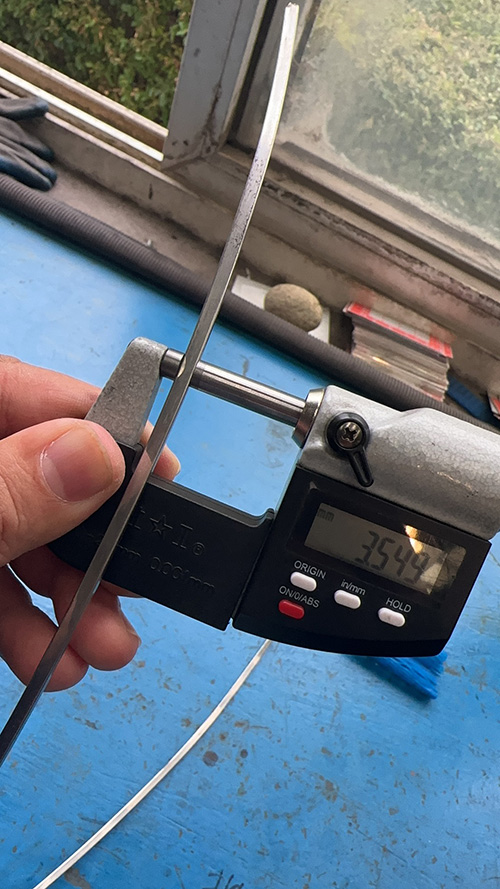
Before outsourcing your metal testing, ask the following:
- Does the lab use calibrated, certified instruments?
- Are the staff trained in both mechanical and metallurgical testing?
- Can they provide detailed reports with traceable data?
- Is the lab independent and free from manufacturing influence?
The answers should reflect a commitment to transparency, consistency, and technical competence.
Conclusion
At Shandong Laboratory, we combine technical accuracy with industry insight to deliver quality control services you can trust. Our team of expert testing engineers leverages cutting-edge instruments and a data-driven approach to ensure your metal products meet performance and safety expectations—every time.
Whether you’re launching a new product line, troubleshooting defects, or satisfying regulatory requirements, our tailored steel testing services can give you the clarity you need.
Ready to take the next step? Get in touch today to build a quality-first future with certified, third-party testing support from a lab that understands your industry inside and out.
FAQ
What types of steel products benefit most from quality control services?
Any steel product intended for load-bearing, high-pressure, or corrosive environments should undergo rigorous testing—this includes pipes, beams, automotive components, fasteners, and welded structures.
Can I integrate third-party quality control into my in-house manufacturing workflow?
Yes. We offer flexible testing schedules and on-demand consultations, so our engineers can seamlessly work alongside your production team without causing delays.
Are quality control services necessary if I trust my raw material supplier?
Even with reliable suppliers, batch variations, transport damage, or improper storage can affect steel quality. Independent verification adds a critical layer of assurance.
How quickly can I receive test results?
Turnaround times depend on the complexity of tests, but we strive for efficiency without compromising accuracy. For standard mechanical and chemical tests, results are often available within a few business days.