
Welcome to My Blog!
Before we dive into the content, I’d love for you to join me on my social media platforms where I share more insights, engage with the community, and post updates. Here’s how you can connect with me: Facebook:https://www.facebook.com/profile.php?id=100085401406977
LinkedIn:https://www.linkedin.com/showcase/102680001/admin/dashboard/ Now, let’s get started on our journey together. I hope you find the content here insightful, engaging, and valuable.
Table of Contents
When you’re dealing with metal products, whether for manufacturing, construction, or industrial applications, quality is non-negotiable. That’s where accurate inspections come in. These inspections ensure your materials meet the highest standards, preventing costly failures and boosting reliability. In this blog, we’ll dive into why precise metal testing matters, how it works, and what you can expect from a professional testing process. Let’s explore how you can achieve top-tier quality control with accurate inspections.
Introduction
Quality control is the backbone of any industry relying on metal materials. From aerospace components to structural beams, the integrity of your materials directly impacts safety, performance, and longevity. Accurate inspections for quality control are critical to catching defects, ensuring compliance with industry standards, and maintaining your reputation. Without them, you risk costly rework, safety hazards, or even project failures.
Think about it: a single flaw in a metal component can lead to catastrophic consequences. That’s why professional testing labs use advanced techniques to verify material properties like strength, durability, and corrosion resistance. By choosing accurate inspections, you’re investing in peace of mind and long-term success. Let’s break down the key aspects of these inspections and how they benefit you.
The Importance of Accurate Inspections in Metal Testing
When you’re working with metals, precision is everything. Accurate inspections for quality control involve rigorous testing to evaluate a material’s mechanical, chemical, and physical properties. These tests ensure your materials can withstand real-world conditions, from extreme temperatures to heavy loads.
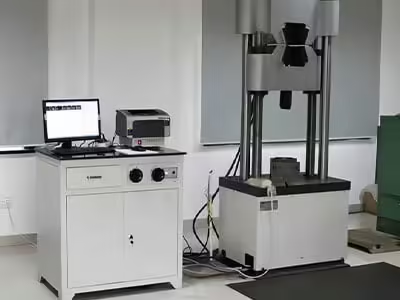
For example, tensile strength tests measure how much force a metal can endure before breaking, while hardness tests assess resistance to wear. Non-destructive testing (NDT) methods, like ultrasonic or radiographic testing, detect internal flaws without damaging the material. By relying on these precise methods, you can trust that your materials meet strict standards, whether for construction, automotive, or industrial use.
Accurate inspections also help you comply with international standards like ASTM, ISO, or ASME. This is crucial if you’re supplying products globally, as non-compliance can lead to rejected shipments or legal issues. With professional inspections, you avoid these pitfalls and ensure your materials perform as expected.
Why You Need Professional Testing for Accurate Results
You might wonder, “Can’t I just do basic checks in-house?” While simple visual inspections have their place, they’re no substitute for professional testing. Accurate inspections for quality control require specialized equipment and experienced engineers who know how to interpret results. A professional lab can tailor testing plans to your specific needs, whether you’re dealing with steel, aluminum, or exotic alloys.
For instance, chemical composition analysis ensures your metal meets the required alloy specifications. Meanwhile, fatigue testing simulates long-term stress to predict how a material will hold up over time. These advanced methods go beyond what most in-house setups can handle, giving you reliable data to make informed decisions.
How Accurate Inspections Ensure Quality Control Success
The process of accurate inspections for quality control is systematic and thorough. It starts with understanding your project’s requirements. Are you testing raw materials, finished components, or welds? A professional lab will design a testing plan that aligns with your goals, using a combination of destructive and non-destructive methods.
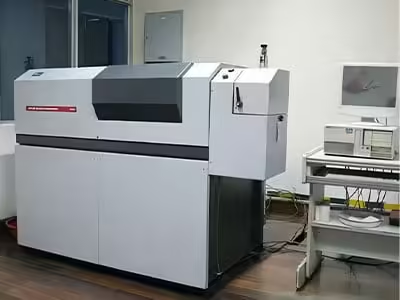
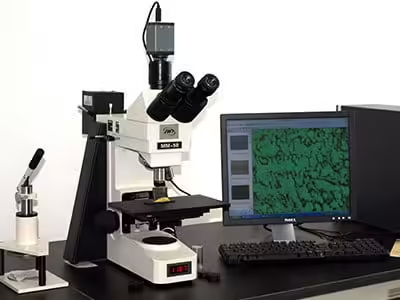
Once the plan is in place, samples are prepared and tested using calibrated equipment. For example, spectrometry might be used to verify alloy composition, while microscopic analysis can reveal microstructural defects. The results are then compiled into detailed reports, giving you clear insights into your material’s performance.
This process doesn’t just catch defects—it also helps optimize your production. By identifying weak points early, you can adjust processes, improve material selection, or enhance quality assurance protocols. The result? Higher-quality products and fewer headaches down the line.
Key Testing Methods for Accurate Inspections
To give you a clearer picture, let’s look at some common testing methods used in accurate inspections for quality control. These methods are tailored to assess different aspects of metal performance, ensuring no stone is left unturned.
| Testing Method | Purpose | Benefits |
|---|---|---|
| Tensile Testing | Measures strength and ductility under pulling force | Ensures materials can handle mechanical stress |
| Hardness Testing | Evaluates resistance to deformation or wear | Confirms durability for long-term use |
| Ultrasonic Testing (NDT) | Detects internal flaws like cracks or voids using sound waves | Non-destructive, ideal for critical components |
| Chemical Analysis | Verifies alloy composition and impurities | Ensures compliance with material specifications |
| Fatigue Testing | Simulates repeated stress to assess long-term performance | Predicts material lifespan under cyclic loading |
These methods, among others, form the backbone of accurate inspections. By combining them, a professional lab can provide a comprehensive evaluation of your materials, ensuring they meet your project’s demands.
Benefits of Choosing Accurate Inspections for Quality Control
So, why invest in accurate inspections? The benefits go beyond just catching defects. Here are some key advantages:
- Enhanced Safety: By identifying flaws early, you reduce the risk of failures that could endanger lives or property.
- Cost Savings: Catching issues before production or installation prevents expensive rework or recalls.
- Improved Reputation: Delivering high-quality, reliable products builds trust with clients and partners.
- Regulatory Compliance: Accurate inspections ensure your materials meet industry standards, avoiding legal or contractual issues.
- Data-Driven Decisions: Detailed reports give you actionable insights to optimize your processes.
For example, imagine you’re manufacturing components for a bridge. Accurate inspections for quality control can confirm that your steel has the right strength and corrosion resistance, ensuring the structure’s safety for decades. That’s the kind of confidence these inspections provide.
How to Choose a Reliable Testing Partner
Not all testing labs are created equal. To get accurate inspections for quality control, you need a partner with the right expertise and equipment. Look for a lab with certified engineers, state-of-the-art facilities, and a track record of delivering reliable results. Ask about their testing capabilities—do they offer both destructive and non-destructive methods? Can they handle your specific materials or applications?
It’s also worth checking if they provide customized testing plans. Your project might require unique tests, like corrosion resistance for marine applications or creep testing for high-temperature environments. A good lab will work with you to design a plan that fits your needs, ensuring no detail is overlooked.
Conclusion
Accurate inspections for quality control are more than just a checkbox—they’re a strategic investment in your project’s success. By catching defects, ensuring compliance, and optimizing performance, these inspections help you deliver products that stand the test of time. Whether you’re producing automotive parts, structural components, or industrial machinery, professional testing gives you the confidence to move forward.
Don’t take chances with subpar materials. Partner with a trusted testing lab to get accurate inspections that safeguard your quality and reputation. With the right approach, you can achieve unparalleled reliability and peace of mind.
FAQ
What are accurate inspections for quality control?
They’re detailed tests conducted by professional labs to evaluate metal properties like strength, composition, and durability, ensuring materials meet quality standards.
Why can’t I do inspections myself?
While basic checks are useful, professional inspections use specialized equipment and expertise to detect issues that visual inspections might miss, ensuring reliable results.
What types of metals can be tested?
Most metals, including steel, aluminum, titanium, and alloys, can be tested using methods tailored to their specific properties and applications.
How long does the inspection process take?
The timeline depends on the tests required and the number of samples. A professional lab can provide an estimated timeframe based on your needs.
Can accurate inspections prevent costly failures?
Absolutely. By identifying defects early, inspections help you avoid production errors, recalls, or safety issues, saving you time and money.