
In the high-precision world of tool-making and heavy-duty gear manufacturing, AISI 4140—often cross-referenced as 42CrMo—is the industry’s most reliable workhorse. However, its versatility depends entirely on its thermal state. To ensure material integrity, rigorous AISI 4140 testing is non-negotiable for validating properties like hardenability and tensile strength before the machining process begins. This technical breakdown explores the essential auditing protocols required for global supply chain compliance.
Table of Contents
Hardness Mapping: 4140 Quenched and Tempered vs. Annealed
Hardness is the primary indicator of wear resistance and machinability. Standard AISI 4140 testing for hardness must distinguish between the varying delivery conditions to prevent tool damage or premature part failure.
- Annealed State: Usually audited via Brinell testing, expecting a range of 180–220 HBW.
- 4140 Quenched and Tempered (QT): This is the most critical audit phase. Advanced AISI 4140 testing mapping utilizes Rockwell C (HRC) to ensure the core and surface hardness align (typically 28–34 HRC).
Inconsistent hardness profiles often signal a failed quenching medium or improper tempering temperatures, both of which are common “red flags” identified during professional metallurgical audits.
Tensile and Yield Audit: Verifying 42CrMo Properties
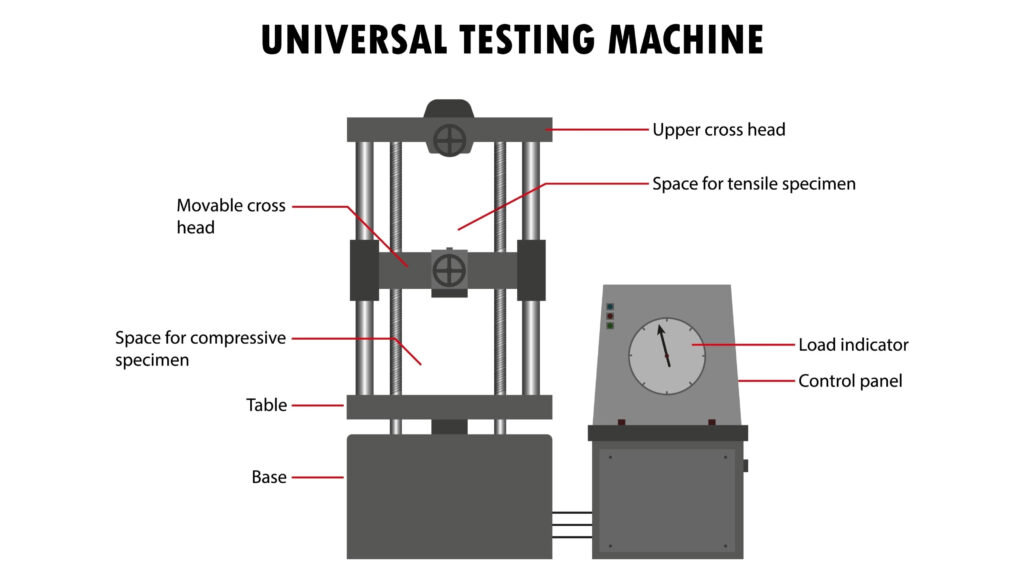
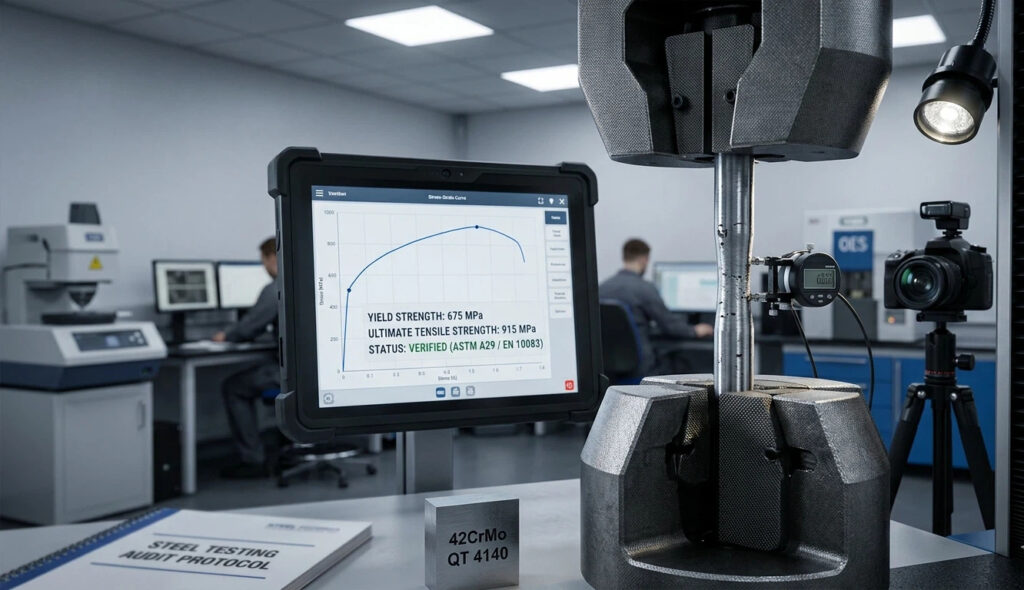
While hardness provides a surface-level clue, tensile verification reveals the structural limits of the steel. Integrating AISI 4140 testing into the audit workflow allows buyers to verify 42CrMo properties against international standards like ASTM A29 or EN 10083.
During the evaluation, we monitor critical metrics:
- Yield Strength: The point of permanent deformation. For QT 4140, this shouldexceed 650 MPa.
- Ultimate Tensile Strength: The peak stress capacity. Precise AISI 4140 testingreveals if the material can handle the 850-1000 MPa required for high-stress fasteners.
Failure to prioritize AISI 4140 testing on tensile parameters can lead to catastrophic failures in oilfield downhole tools or heavy-duty shafts where ductility is paramount.
The Gold Standard: Jominy End-Quench Test
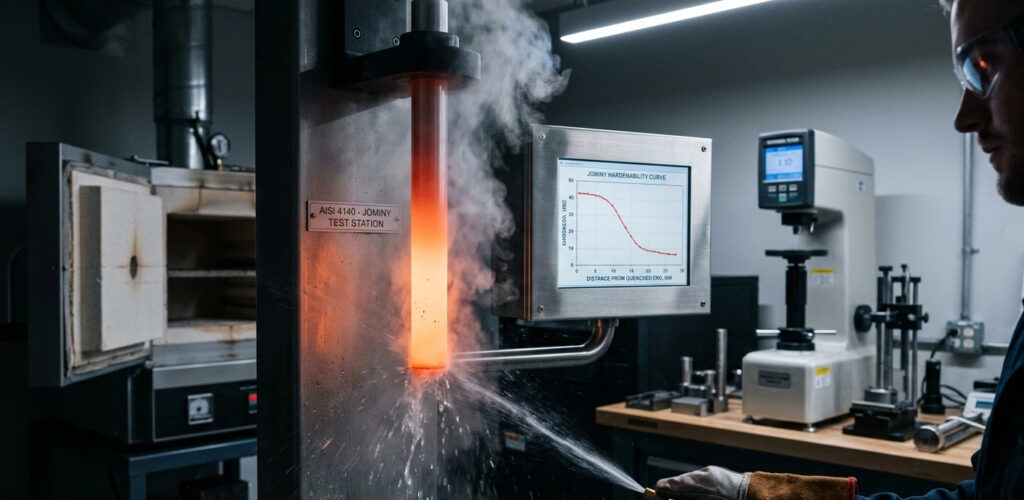
For large-diameter components, surface checks are insufficient. Sophisticated AISI 4140 testing involves the Jominy end-quench test to evaluate the material’s hardenability.
By heating a standard 1-inch bar and quenching one end with a controlled water spray, we generate a hardenability curve. This specific AISI 4140 testing identifies how deep the HRC profile will penetrate into a 4-inch or 6-inch section. If the curve drops too sharply, the core of the part will remain soft, rendering the entire batch unfit for heavy-load applications.
Strategic Advantage: Professional Steel Testing Services
Relying solely on a supplier’s Mill Test Certificate (MTC) is a risk in a volatile global market. Third-party AISI 4140 testing offers an unbiased layer of security, filtering out sub-standard batches before they enter your production line.
Professional AISI 4140 testing packages include:
- OES Chemical Analysis: Confirming Chromium and Molybdenum levels meet the “41” series grade.
- Microstructure Audit: Checking for banded structures or excessive decarburization.
- NDT Verification: Using ultrasonic testing to detect internal voids in large billets.
Conclusion
Establishing a high standard of material QA is not just about compliance; it is about operational survival. By implementing AISI 4140 testing into your procurement strategy, you bridge the gap between “purchased specs” and “actual performance.” Whether you are auditing 4140 quenched and tempered bar stock or verifying 42CrMo properties, a data-driven approach is the only safeguard against engineering failure.
FAQ
Is AISI 4140 exactly the same as 42CrMo4?
They are very close equivalents. However, 42CrMo properties under EN 10083 often have tighter tolerances for harmful elements like Phosphorus. Independent lab verification is recommended.
What is the turnaround time required for AISI 4140 testing?
A standard mechanical audit (Hardness + Tensile) typically takes 2–3 business days, while a full Jominy analysis may require additional time for precise cooling and mapping.
Can 4140 be surface hardened?
Yes. While it is often used in a QT state, it is an excellent candidate for induction hardening to achieve a surface hardness of 54–59 HRC.