
Table of Contents
steel composition failure analysis is often the turning point between speculation and proven root cause when steel components crack unexpectedly. Whether the failure appears after welding, cold bending, or during service, chemical evidence frequently determines whether the issue lies in raw material quality or in processing conditions.
In practical industry scenarios, this investigation is not theoretical — it directly supports warranty decisions, supplier disputes, and production optimization.
This article explains how composition data, micro-analysis, and professional steel testing services work together to isolate the true source of failure.
Why steel composition failure analysis matters in real industrial disputes
When a crack appears, the first reaction is often to blame fabrication.
However, many failures originate from:
- Excess sulfur (S) promoting hot shortness
- Elevated phosphorus (P) causing grain boundary embrittlement
- Alloy element segregation (Mn, Cr, Mo)
- Improper deoxidation or inclusion control
- Off-spec trace elements
A structured steel composition failure analysis distinguishes:
- Material non-conformance
- Processing parameter deviation
- Or a combined effect
steel composition failure analysis in weld cracking cases
Hypothetical case: circumferential weld crack in a pressure vessel
Observed:
- Cracks along the heat-affected zone (HAZ)
- Intergranular fracture morphology
Laboratory findings:
- Local phosphorus enrichment at grain boundaries
- Sulfide inclusions elongated in rolling direction
- Hardness increase adjacent to fusion line
Interpretation:
- Grain boundary embrittlement promoted by P segregation
- Residual welding stress triggered crack propagation
Here, steel composition failure analysis demonstrated that chemistry contributed significantly, even though welding parameters were within recommended ranges.
In such cases, a professional steel testing service typically performs:
- Optical Emission Spectroscopy (OES) for bulk chemistry
- SEM-EDS for localized micro-analysis
- Metallographic examination
- Microhardness mapping
Combining these methods provides defensible conclusions for engineering review.
steel composition failure analysis in cold bending fractures
Hypothetical case: structural plate cracking during 90° cold bend
Initial suspicion: bending radius too small.
Testing revealed:
- Mn segregation banding
- Elevated local hardness in segregated regions
- Slightly above-spec phosphorus content
The crack path followed hardened segregation bands.
The failure mechanism was not purely geometric strain overload. Instead, chemical heterogeneity increased brittleness at the bend root.
A structured steel composition failure analysis helped separate:
- Mechanical overstress
- Metallurgical brittleness
- Or a combination of both
This distinction is critical when evaluating supplier liability.
Core laboratory workflow in steel composition failure analysis
Professional steel testing services follow a repeatable diagnostic chain:
1.Background review
- Material certificate comparison
- Welding or forming parameters
- Service environment
2.Macroscopic inspection
- Crack orientation
- Fracture surface characteristics
3.Bulk chemical verification
Performed using calibrated OES or XRF systems traceable to NIST standards.
This step confirms:
- Grade conformity
- Major alloy balance
- S and P levelsS
4.Localized chemical mapping
SEM-EDS or EPMA identifies:
- Grain boundary segregation
- Inclusion composition
- Tramp elements
5.Microstructure & hardness correlation
- Martensite islands
- Banding
- HAZ coarsening
- Hardness peaks
Only when chemistry aligns with fracture morphology can the laboratory confidently conclude material-driven failure.
How sulfur and phosphorus influence crack behavior
Understanding elemental behavior is essential.
- Forms MnS inclusions
- Causes hot shortness
- Promotes crack initiation at elevated temperature
- Segregates to grain boundaries
- Increases cold brittleness
- Associated with intergranular fracture
Even small deviations can alter fracture mode.
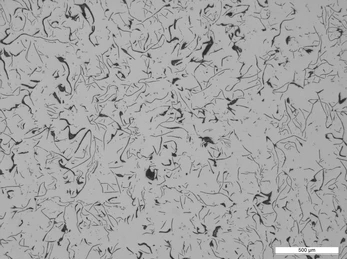
A precise steel composition failure analysis does not rely on global averages alone. Localized enrichment is often the decisive factor.
When the problem is process, not chemistry
Not every crack with inclusions is caused by raw material quality.
Indicators of process-driven failure:
- Excessive cooling rate after welding
- Lack of preheat
- Improper tempering
- Over-bending beyond material capability
If bulk and local chemistry remain within specification and no abnormal segregation is found, the focus shifts to fabrication controls.
An experienced laboratory will state clearly when steel composition failure analysis excludes chemical root cause.
This neutrality is essential in international supply chains.
Integrating steel testing services into preventive strategy
Beyond reactive investigation, steel composition failure analysis is valuable for prevention.
Applications include:
- Incoming raw material verification
- Supplier qualification audits
- Pre-production welding trials
- High-risk component validation
A reliable steel testing partner can provide:
- Rapid composition screening
- Failure root cause reports
- Technical consultation
- Compliance documentation for export markets
For manufacturers targeting overseas customers, documented laboratory evidence increases credibility and reduces dispute risk.
Choosing the right steel testing service
When selecting a provider, consider:
- ISO/IEC 17025 accreditation
- Equipment capability (OES, SEM-EDS, metallography)
- Experience with weld and forming failures
- Ability to issue technical root-cause reports
Effective steel composition failure analysis requires more than elemental measurement. It requires metallurgical interpretation.
Final thoughts
Cracks do not appear randomly.
They reflect a combination of chemistry, microstructure, and stress history.
A structured steel composition failure analysis transforms fracture surfaces and elemental data into actionable conclusions. Whether the issue originates in sulfur content, phosphorus segregation, alloy banding, or processing parameters, laboratory evidence defines responsibility.
For manufacturers operating in global markets, integrating professional steel testing services into both preventive quality control and failure investigation is no longer optional — it is strategic risk management.