
Table of Contents
Introduction
In today’s competitive manufacturing environment, inspeccion de calidad (quality inspection) plays a crucial role in maintaining product integrity, customer satisfaction, and regulatory compliance. Detecting defects early prevents costly rework, reduces returns, and strengthens supply chain confidence.
At Shandong Laboratory, we specialize in delivering precise, impartial inspecc ion de calidad using advanced tools and methods to verify materials, dimensions, and functionality.
Objectives of Inspeccion de Calidad
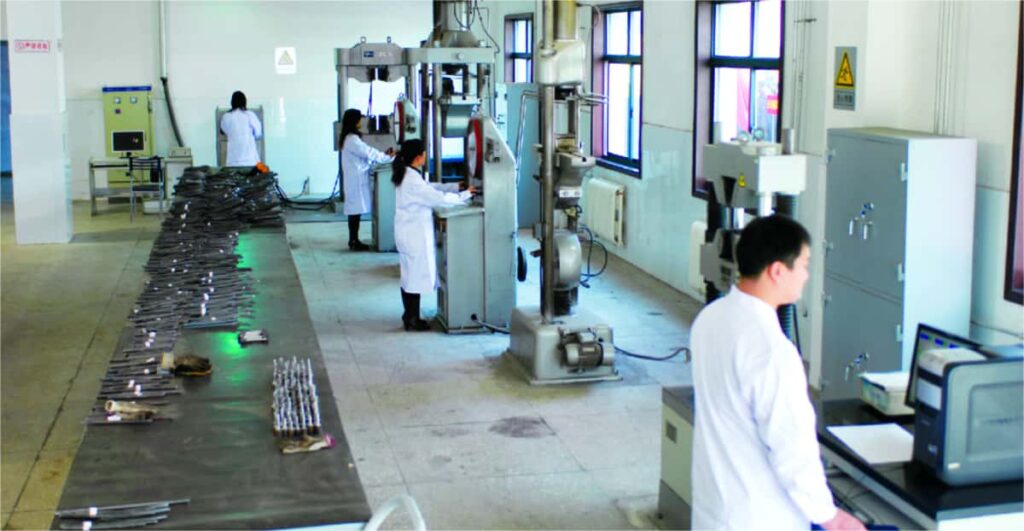
Key Goals
- Ensure products meet customer and regulatory specifications
- Prevent defective products from reaching the market
- Comply with international standards such as ISO, ASTM, and EN
- Minimize production costs caused by rework or recalls
Benefits to Manufacturers
- Enhanced customer trust
- Consistent product quality
- Improved process efficiency
- Risk reduction in global supply chains
Types of Inspeccion de Calidad
Dimensional Inspection
Dimensional accuracy ensures components fit and function properly. Common tools include:
- Vernier calipers
- Micrometers
- Height gauges
- Coordinate Measuring Machines (CMM)
- Laser scanners and 3D measurement systems
Key Metrics Measured
- Length, width, and height
- Diameter and thickness
- Flatness, roundness, and geometric tolerances
Surface and Visual Inspection
Surface quality affects aesthetics and performance. Tools include:
- Magnifying lenses
- Optical comparators
- Surface roughness testers
- Digital microscopes
Common Surface Defects Checked
- Scratches
- Dents and dents
- Cracks and weld spatter
- Coating uniformity and color consistency
Material Inspection
Material testing ensures mechanical and chemical properties meet specifications. Tools and methods include:
- Hardness testers – Rockwell, Brinell, Vickers
- Tensile and bend testing machines – evaluate ductility and strength
- Portable chemical analyzers (XRF/OES) – analyze elemental composition
Typical elements analyzed in metals:
- Carbon (C)
- Manganese (Mn)
- Silicon (Si)
- Chromium (Cr)
- Nickel (Ni)
- Molybdenum (Mo)
Non-Destructive Testing (NDT)
NDT tools detect defects without damaging components:
- Ultrasonic testing (UT) – detects internal flaws
- Magnetic particle testing (MT) – identifies surface and near-surface cracks
- Dye penetrant testing (PT) – highlights fine surface cracks
- Eddy current testing (ET) – detects conductive material defects
Comparing Destructive vs Non-Destructive Testing
| Test Type | Detects | Sample Requirement | Accuracy | Notes |
|---|---|---|---|---|
| NDT (UT, MT, PT, ET) | Internal & surface defects | Finished components | Medium to High | Non-destructive, ideal for in-service inspection |
| Destructive (Tensile, Bend, Hardness) | Mechanical properties | Standardized samples | High | Provides detailed material behavior, sample is destroyed |
Digital and Automated QC Tools
Automation and digital tools enhance inspection efficiency:
- Laser and 3D scanning systems
- AI-powered defect detection software
- Laboratory Information Management Systems (LIMS)
Advantages
- Faster inspection cycles
- Reduced human error
- Traceable and organized data records
Typical Process of Inspeccion de Calidad

- Planning and Document Review
- Review drawings, CAD models, material certificates (MTRs), and purchase orders (POs)
- Define inspection criteria and standards
- On-Site Verification and Dimensional Checks
- Count items, check packaging and shipping marks
- Measure critical dimensions using calipers, micrometers, or CMM
- Surface and Functional Assessment
- Inspect surface defects, coatings, and assembly quality
- Conduct functional tests where applicable
- Material and Performance Validation
- Verify chemical composition and mechanical properties
- Cross-check supplier test reports for authenticity
- Reporting and Follow-up Actions
- Provide detailed documentation with photos and measurements
- Recommend corrective actions if defects are found
Tool Selection Guidelines
Matching Tools to Product Type
- Material type: metals, plastics, or composites
- Critical tolerances and geometric complexity
- Destructive or non-destructive testing depending on part criticality
Calibration and Maintenance
- Regular calibration ensures measurement accuracy
- Maintain inspection logs for compliance with ISO standards
- Train personnel for proper tool handling
Cost vs Accuracy Considerations
- Handheld tools: portable, cost-effective, suitable for quick checks
- Laboratory-grade instruments: high precision, ideal for critical inspections
Common Challenges in Inspeccion de Calidad
- Tool wear and calibration drift
- Operator errors and inconsistent measurements
- Managing inspection data efficiently
- Selecting appropriate tools for complex parts
Conclusion
Implementing thorough inspeccion de calidad ensures products meet specifications, minimizes defects, and builds customer trust. By combining dimensional, surface, material, and NDT methods, manufacturers can prevent costly issues and maintain compliance with international standards.
At Shandong Laboratory, we provide expert inspeccion de calidad services using advanced tools and accredited procedures. Protect your products and optimize your production process—contact us today for a personalized consultation and inspection plan.
FAQ
What are the essential QC inspection tools for manufacturing?
Vernier calipers, micrometers, hardness testers, tensile machines, NDT kits, and digital measurement systems.
How often should QC inspection tools be calibrated?
Typically annually or more frequently for high-precision instruments.
Can visual inspection alone ensure quality?
No, visual inspection should be combined with dimensional and material tests for comprehensive coverage.
How do I choose between destructive and non-destructive testing?
Use destructive tests to understand mechanical behavior and NDT to inspect finished components without damage.
Is investing in digital QC tools worthwhile?
Yes, they improve accuracy, reduce human error, and allow faster, traceable inspections.