
When auditing critical structural profiles for high-altitude crawler cranes or offshore terminal assets, skipping thorough laboratory validation invites sudden, catastrophic structural cleavage. Choosing structural materials based solely on generic ambient yield strength guarantees vulnerability during sudden sub-zero thermal drops. This deep-dive engineering blueprint provides a technical audit protocol for validating the specific S355 steel grades specified for low-temperature operating environments. Read this breakdown to master the exact chemical threshold variances across sub-qualities, align multi-variant toughness profiles within your design parameters, and secure a verifiable testing roadmap that completely insulates your heavy machinery assets against catastrophic brittle fracture under extreme fatigue loading.
Table of Contents
The True Cost of Brittle Fracture in Heavy Lifting Assets
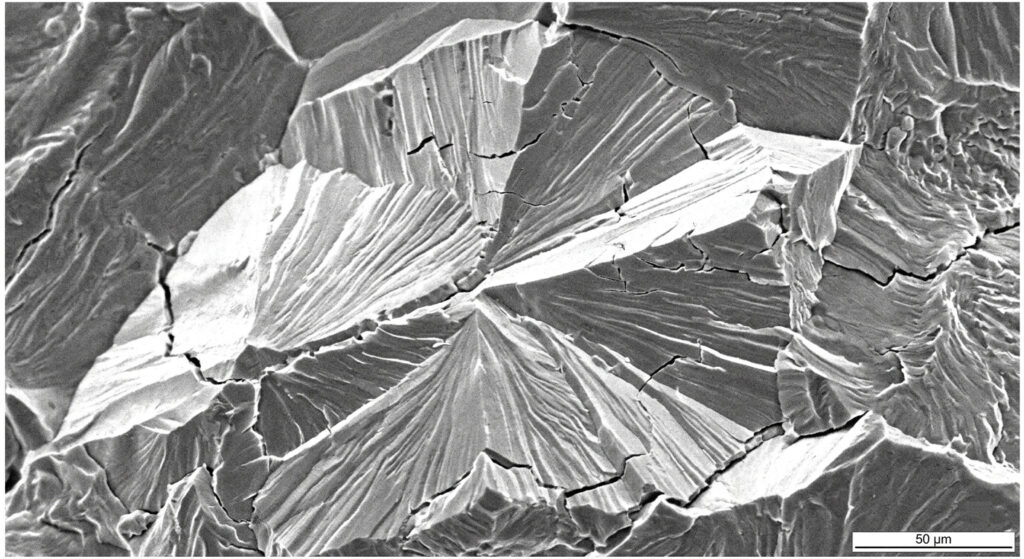
Relying on standard mill test certificates (MTCs) without tracking the precise sub-zero ductile-to-brittle transition temperature (DBTT) exposes your asset infrastructure to structural collapse. In cold-climate heavy manufacturing, structural components experience localized micro-cracking when load stresses concentrate around structural welds. Under high-altitude wind shears or dynamic hoisting shocks, a material with insufficient fracture toughness allows these minor defects to propagate at supersonic speeds, resulting in instant structural separation without prior plastic deformation.
To prevent this, structural engineers must look past generic yield strength metrics and scrutinize the carbon equivalent values (CEV) across the specific subclass designations of S355 steel grades. The baseline production techniques used by primary steel mills directly govern how a structural profile will behave when environmental temperatures plummet below freezing.
For instance, structural sections manufactured from steel that lacks micro-alloying elements like aluminum or vanadium will naturally feature coarse ferrite grains. These grain boundaries fail to hinder crack propagation when structural loads shift dynamically, transforming an expensive asset into an active operational liability.
Evaluating Your Project Risks Across S355 Steel Grades
Cross-border procurement and structural design compliance demand complete alignment with the official provisions of the European Standard EN 10025-2: Hot rolled products of structural steels. This core framework establishes the baseline metallurgical delivery parameters for non-alloy structural steels.
When structural engineers write general structural specs using the overarching family classification of S355 steel grades, they are omitting the vital sub-quality designations that dictate real-world survival limits under cold-climate conditions.
| Quality Grade | Yield Strength (t≤16mm) | Impact Testing Temperature | Minimum Energy Target |
| S355JR | ≥ 355 MPa | 20°C | 27J |
| S355J0 | ≥ 355 MPa | 0°C | 27J |
| S355J2 | ≥ 355 MPa | – 20°C | 27J |
| S355K2 | ≥ 355 MPa | – 20°C | 40J |
Selecting the wrong sub-grade based on initial purchase cost usually yields severe operational penalties. While an engineering firm might save on material costs by integrating standard commercial-grade plate variants, they are effectively introducing built-in manufacturing weak spots.
When specifying components destined for Northern European maritime shipping yards or high-altitude alpine mining sectors, skipping the rigorous microstructural classification check of your chosen S355 steel grades creates a direct path toward unexpected project insurance liability claims.
When a Standard S355JR Impact Test Fails to Protect Arctic Machinery
The common practice of choosing an entry-level structural plate for heavy machinery profilesoften comes down to budget constraints. However, running a standard S355JR impact testsequence only verifies material toughness at a warm room temperature of 20° C. This testbaseline completely ignores the metallurgical transformation that occurs when the samestructural plate operates under sub-zero conditions.
At room temperature, the steel’s microstructural matrix easily absorbs kinetic impacts through standard dislocation movement. Yet, as thermal conditions decrease, this exact same steel grade can cross its critical transition zone, turning brittle and prone to shattering.
Premium material suppliers implement strict ladle analysis monitoring to deliberately keepdetrimental interstitial elements like phosphorus (P) and sulfur (S) well below the commercialmaximum thresholds permitted by the European standard. Uncontrolled sulfur concentrationslead to the formation of elongated manganese sulfide (MnS) inclusions during hot rollingcycles.
These inclusion paths act as internal highways for stress concentration. When your manufacturing floor applies high heat input through automated multi-pass welding, these zones open up, causing lamellar tearing and making the S355JR impact test validation data completely irrelevant for sub-zero service.
To achieve real structural longevity, technical procurement directors should seek out refined S355 steel grades processed via specialized ladle metallurgy furnaces (LMF). This processing step ensures a fully killed steel structure utilizing silicon or aluminum deoxidization methods.
By eliminating gaseous oxygen from the molten metal pool, the steel develops a clean, ultra-fine grain configuration capable of arresting micro-fissures before they scale up into severe structural breaks.
Verification Testing of High-Risk S355 Steel Grades
To secure true component reliability, our testing facility implements a dual-stage verification framework that bridges chemical OES (Optical Emission Spectrometry) testing with advanced physical fracture mechanics. When evaluating third-party plates across diverse S355 steel grades, it is crucial to audit the microstructure for banded pearlite alignment, which naturally limits transverse toughness.
Our laboratory utilizes state-of-the-art destructive testing equipment to map how these S355 steel grades react under severe strain rates, providing buyers with clear structural safety proof well before fabrication begins.
By running high-magnification grain sizing audits alongside standard mechanical stress tests, our independent verification laboratory identifies hidden defects that standard factory documentation routinely overlooks.
Whether your team is dealing with standard heavy-walled sections or custom forged profiles, verifying the micro-alloying ratios within your chosen S355 steel grades remains the single most reliable way to maintain full compliance with complex international engineering codes.
ranslating Charpy V-Notch Values into Cold-Climate Asset Safety
Converting material laboratory data into actionable finite element analysis (FEA) data requires adeep mechanical understanding of Charpy V-notch values across changing temperaturescales. Designers cannot assume that a material exhibiting a standard energy absorption valueof 27 J at its test baseline will maintain that protective capability when a maritime cranehandles heavy dynamic loads at -15°C.
Instead, engineering teams should demand that their supply partner provide a complete transition curve plot derived from multiple physical destructive test cycles.
To cross-verify these laboratory benchmarks against established international parameters, procurement specialists should audit incoming mill sheets against the specific testing parameters outlined in ISO 148-1: Metallic materials — Charpy pendulum impact test. This international standard sets the exact geometric dimensioning parameters for machining V-notch test samples.
To cross-verify these laboratory benchmarks against established international parameters, procurement specialists should audit incoming mill sheets against the specific testing parameters outlined in ISO 148-1: Metallic materials — Charpy pendulum impact test. This international standard sets the exact geometric dimensioning parameters for machining V-notch test samples.
Advanced Destructive Protocols for Auditing S355 Steel Grades
Validating raw metal performance requires checking more than just standard tensile limits. Our specialized laboratory applies specialized destructive protocols to confirm that incoming S355 steel grades can withstand intense dynamic loads without early cracking.
By measuring the exact energy required to drive a crack through a cold-conditioned specimen, we isolate the specific performance differences that separate premium structural plates from cheap, generic options.
Our precision testing equipment accurately records the yielding behavior of various S355 steel grades under realistic loading speeds. This empirical verification removes the guesswork from material selection, letting your procurement team buy with confidence.
With our independent laboratory reports in hand, you can hold your global suppliers to strict quality standards, ensuring your S355 steel grades meet every technical requirement of your contract.
Ensuring Low Temperature Steel Safety in Offshore Lifting Applications
Achieving absolute low temperature steel safety within offshore wind turbine construction or
polar marine infrastructure demands a total departure from standard non-alloy structural steelchoices. When heavy machinery operates in environments where ambient atmosphericconditions regularly drop below -20°C, the structural design framework must specify atransition to advanced sub-grades like S355J2 or S355K2.
These advanced qualities undergo strict validation testing at -20° C, ensuring the materialretains a robust energy absorption capacity of 27 J and 40 J respectively, providing a vitalsafety margin against brittle failure under dynamic fatigue loading.
To safely execute these complex, cold-climate projects, global procurement managers must verify that their chosen structural steel suppliers operate under strict production control frameworks, such as those mandated by the European Steel Association (EUROFER) Market Compliance Guidelines.
Furthermore, all physical material tracking must align with the traceability parameters specified in BS EN 10204: Metallic products – Types of inspection documents. This ensures that every individual structural shape can be traced back to its specific furnace batch.
By enforcing Type 3.2 independent third-party inspection certifications for thick-walled components, your engineering team can guarantee that the specified S355 steel grades will deliver long-term, reliable performance under the harshest sub-zero operating conditions.
Technical Verdict
Protecting your heavy industrial infrastructure from sudden structural failures requires moving beyond basic cost-per-ton metrics to implement strict metallurgical quality control. When comparing international structural metal options, opting for cheaper, unrefined variants often introduces hidden long-term costs in the form of weld cracking, field remediation work, and component failures.
By embedding precise EN 10025-2 sub-grade requirements, detailed Charpy impact performance profiles, and verified grain-refining micro-alloying criteria into your early engineering requests for quotes (RFQs), you remove supply chain vulnerabilities.
Our laboratory stands ready to provide the independent testing verification required to confirm that your incoming S355 steel grades deliver consistent grain uniformity, predictable heat treatment response, and maximum rolling efficiency across your entire 2026 production calendar.
If you are ready to eliminate brittle fracture risks and protect your heavy equipment lines with high-purity, fully certified low-temperature structural profiles, contact our independent metallurgical testing team today to submit your technical specification sheets and request a tailored validation testing protocol for your next project batch.
FAQ
Why does the S355J2+N designation offer superior low temperature steel safety compared to standard S355JR?
The “+N” modifier indicates that the steel has undergone a controlled normalising rolling or separate normalizing heat treatment process. This refines the coarse as-rolled microstructure into a uniform, ultra-fine ferrite-pearlite grain structure, which significantly lowers the material’s ductile-to-brittle transition temperature.
What specific geometric anomalies in the Charpy specimen can invalidate the resulting Charpy V-notch values?
Any deviation in the machined notch depth (standard 2 mm), the notch radius(standard 0.25 mm), or rough surface machining marks within the notch root willcreate artificial stress concentrators, resulting in falsely low energy absorptionreadings during laboratory testing.
Can we safely substitute American ASTM A572 Grade 50 profiles when the original design specifies S355 steel grades?
While their basic yield strengths are comparable (345 MPa vs 355 MPa),standard ASTM A572 Grade 50 does not require mandatory sub-zero impact testingunless explicitly requested via supplementary requirement S5. You must addsupplementary Charpy testing to match the structural safety performance of a trueS355J2 or K2 profile.