
This blog immediately addresses the specific pain point shared by every QA/QC manager: distinguishing authentic 3. 316L vs 304 hardness profiles to verify material quality without resorting to expensive chemical analysis for every batch. If you have been struggling with conflicting test results or need a step-by-step roadmap for your workshop, this blueprint will fix it. We will cut through the noise, providing the precise standards and expert troubleshooting tips you need to gain confidence in your inspection data. Let’s look at how to standardize your 4. SS316 hardness testing routine now.
Table of Contents
316L vs 304 Hardness
As stainless steels, both 304 and 316L look identical to the naked eye. However, their internal metallurgy defines their application limits.
The primary difference lies in the addition of molybdenum in the 316 series (including the low-carbon variant, 316L). This addition provides drastically superior corrosion resistance, specifically against pitting in chloride-heavy environments. A catastrophic project failure often begins when a lower-grade 304 part is mistakenly installed where a 316L specification is required. While you can confirm this difference chemically, a proper 6. SS316 hardness testing run offers a high-speed, non-destructive initial verification method.
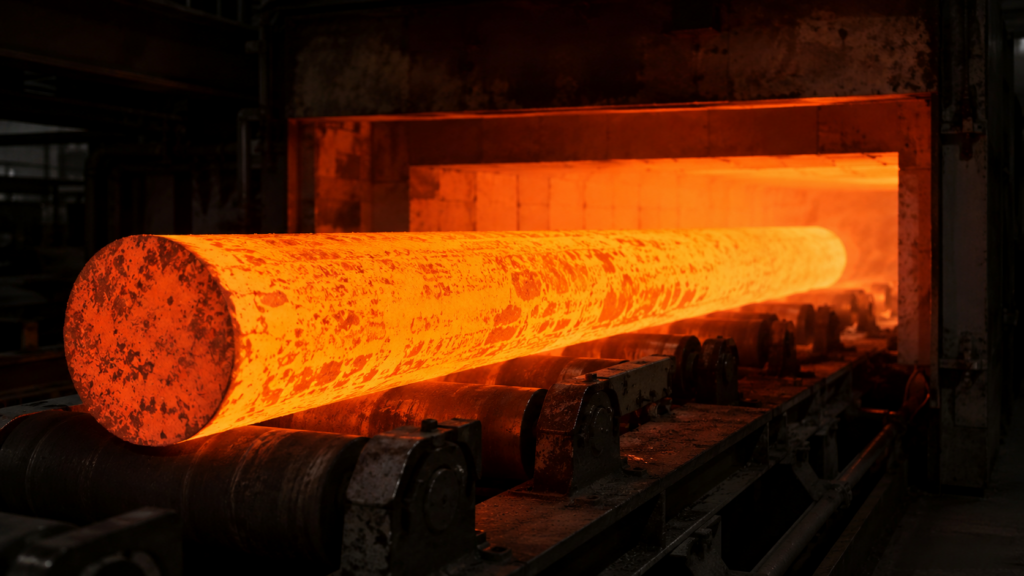
How to Verify 316 Stainless Steel Quality Using Hardness Tests
Implementing 7. how to verify 316 stainless steel quality using hardness tests provides your supply chain with immediate accountability. It isn’t just about reading a number on a dial; it’s about establishing process control. For effective material validation, your team must adhere to the following sequence:
1.Execute Surface Preparation
The importance of this step cannot be overstated. A reliable 8. SS316 hardness testing result is only possible on a meticulously prepared surface.
- Any existing scale, oxide layer, coating, or carburized surface defect will falsely increase the hardness reading.
- Lightly grind or polish the test area until it is smooth and flat, ensuring the indenter makes orthogonal contact.
2.tandardize Testing Methods for Stainless Steel Verification
Choosing the correct method is half the battle. While 9. SS316 hardness testing is versatile, not all methods are equal.
- Rockwell B Scale (HRB): This is the definitive “gold standard” for austenitic stainless steel in its annealed state. HRB provides a highly repeatable macro-hardness measurement that is recognized globally.
- Brinell Testing (HBW): Brinell is the preferred method for measuring hardness on massive, heavy-section forged or cast components where a larger indenter is needed to average out microstructure variations.
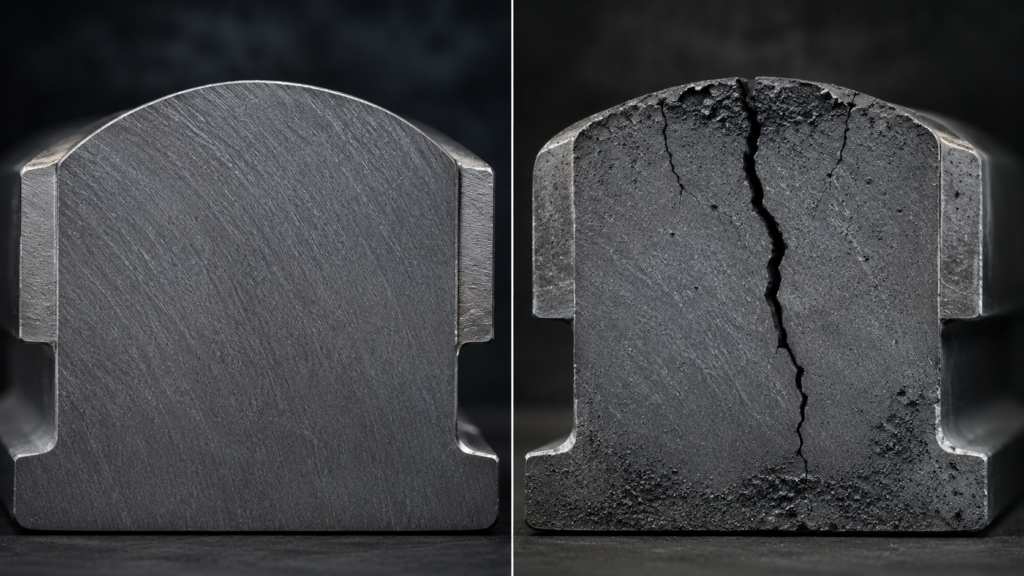
Troubleshooting Conflicting SS316 Hardness Testing Results
Sometimes, despite your best preparation, your 10. SS316 hardness testing results don’t align with the material certificate. This is where process understanding is paramount.
The single most common pitfall when attempting 11. how to verify 316 stainless steel quality using hardness tests is failing to account for cold work. While SS316 and SS316L are not hardenable by heat treatment, they “work harden” aggressively.
- If the component has been severely cold-drawn, rolled, or stamped, the surface hardness will be substantially higher than the annealed core.
- This localized hardening will ruin your material verification effort by making a 304 part appear as hard as a higher specification component, or falsely indicating poor annealing. For accurate validation, always perform 12. SS316 hardness testing on samples that are confirmed to be in the annealed condition.
To maximize accuracy, use a checklist to identify and eliminate these common sources of error:
- Verify test surface flatness is sufficient for the chosen method.
- Calibrate equipment against certified test blocks daily.
- Maintain adequate edge distance between multiple indents.
- Apply load smoothly without impact or vibration.
Conclusion
To conclude, maintaining strict quality control is the backbone of any successful engineering project, and it begins with reliable data. By integrating professional SS316 hardness testing into your regular inspection workflow, you gain the ability to preemptively catch material inconsistencies, prevent costly production delays, and ensure your components meet the highest industrial safety standards. Moving beyond simple visual checks to a standardized mechanical validation process is not just a best practice—it is your company’s ultimate insurance against material failure. Standardize your testing protocols today, consult the latest ASTM material standards for specific grade requirements, and commit to the precision that your critical infrastructure demands.
FAQ
Can you differentiate 316L from 304 using only SS316 hardness testing?
No, it is not a sufficient stand-alone method. Both materials have identical hardness specifications in the annealed state. You must combine 13. SS316 hardness testin with a chemical analysis like Positive Material Identification (PMI) to make a definitive grade distinction.
Does the low carbon content of 316L result in lower hardness compared to standard 316?
In practical terms, no. While 316L has reduced carbon to enhance weldability, both grades are specified to meet the same hardness range (typically max 92-95 HRB), which depends more on the final annealing temperature than the marginal carbon difference.
What is the ideal testing scale for SS316 hardness testing on small parts?
Rockwell B (HRB) is the industry standard for general mechanical engineering. For small or complex geometries where HRB is impractical, a micro-hardness method like Vickers (HV) or Knoop (HK) is used, although these results require careful conversion for comparison.